Pages

Showing posts with label faith formation. Show all posts

Thursday, March 13, 2014

Lent 2014: a study in virtue


Sometimes your Lenten focus comes to find you. Typically, we try to focus on some element of the faith together as a family, and this year I was coming up short trying to think of something. But that was probably the problem, right? I was trying to drum something up from my own resources, rather than trying to “see” what was already right there. As it happens, our gentle Lord was already pulling things together.


Benny is working on an amazing project right now for his Literature class at this fine learning institution for homeschoolers. There is a project fair coming up where students have to create a project that answers the question Why do we tell stories? The project must also approach the answer through the myths, legends, and fairytales that were studied in the first half of the year. Benny’s project is an involved, quest-style board game based in the legend of King Arthur and his knights. His answer to the question is To teach virtue. 

As you can imagine, the invention of a board game is a family affair. Consequently, there has been much discussion around virtue and vice as research for the game. It has opened up a world of language for us that we really didn’t have at the ready. As Catholic converts, neither Scott nor I had formation in the Virtues proper. It’s just not something that gets talked about in a systematic way very often in the church traditions we encountered. Have you ever noticed how language is crucial to complex thinking? If you don’t have vivid, specific language for something, it’s actually harder to think about it. This is why beautiful language matters...this is close to my heart!


Another discussion we’ve been having for a few months now has to do with Buckets. Buckets? Yes. As you may know, Scott is an elementary school art teacher. In his school, the language used to help the children with issues around “kindness” takes the form of “filling buckets.” You can imagine the scenario...Johnny hurt me on the playground, and that made my bucket feel empty. Or, When you said that you liked my shirt, that helped to fill my bucket. 

*sigh*

I hesitate to use the phrase ‘dumbing down,’ but…

And I guarantee that this methodology is being used across Massachusetts, if not across the country. Is “filling buckets” really the best we can do?

Can you imagine the greater possibilities for actually teaching virtue if we were willing to use words like fortitude, courage, hope, charity, temperance, kindness, humility, patience, chastity, diligence, and prudence?

So, we’ve been talking about this around the house for a while, and since Benny’s project is really drawing us into the subject, we’re studying the Virtues for Lent ( I guess, by the capital V, I mean the classical, time-honored virtues, including the Cardinal and Theological, as well as the medieval expression of the seven deadly sins and their counterpart virtues). Some of our "study" is coming directly from Aquinas, as we tackle each virtue and vice by definition. Some study and inspiration will come from other books.

Scott is reading The Father of the Family, which was recommended by you know who. 


I just finished Josef Pieper's A Brief Reader on the Virtues of the Human Heart, which dear Erin pulled right off of her shelf when I told her I was looking for books about virtue.  It was wonderful.  In fact, I will probably do some writing about it in another post, since this one is getting too wordy! 


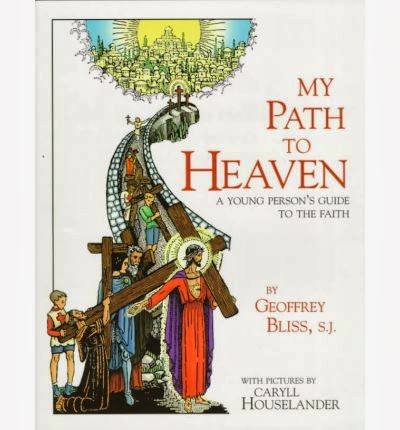
I’m also using a lovely, lovely book called My Path to Heaven with Asher right now (he's 7), and may even try it with Jude (9). It’s full of complex illustrations by Caryll Houselander, which the children have to look carefully at as the text is read. (Thank you for this recommendation Jennifer!) It's not about virtue alone, but it certainly fits in with what we’re doing. 


And finally, we have our Stations of the Cross candle stand, which Scott made a while back. Do you remember?


(they look so little up there! I think that was two years ago...)

This past week was First Friday, and we went to Mass, so we didn’t do Stations as well, but tomorrow, and hopefully the rest of the Fridays in Lent, we will use this candle stand by lighting them all, and snuffing them as we move through the stations. We’ve used the Liguori meditations in the past, which are wonderful. Though, Auntie Leila assures me that no complicated meditation is needed, just the prayers. However, I am excited to try these. (Do you know about these beautiful UK Jesuits? Thank you Sarah, for this tip!!) I need to do a whole post about how this website is teaching us to pray anew… Finally, we hope to get ahold of the DVD done by Father Barron called Seven Deadly Sins, Seven Lively Virtues, though I don't know how yet. Anyone out there have a copy to lend?

What do you do to study the virtues in your family? Do you have any great resources to pass along the titles of?

Praying for a Holy Lent for all of Christendom!

Sunday, February 16, 2014

a book I think you should read

by Mary Reed Newland


This book arrived two days ago.  I can't believe how…well…just wonderful it is.  It is all at once affirming and exhorting.  Anglican and Episcopalian friends, do not be deterred!  Indeed, anyone in a liturgical tradition, or even any Christian willing to deal with the term 'Catholic,' will enjoy this.

I admit that there is a bit of the feeling of 'If only I had had this when baby number one was still nursing.' But there is no turning back, right?  When my dear friend had a look at it while our kids were at choir yesterday, her response was 'It makes you want to start over.'

This is why I need to tell you about it now!  So all of our very next babies will benefit.  And it is NOT too late for the others, or for us, I'm sure.  It's never too late to grow and change.  These pages contain some beautiful thoughts that I can tell will have a profound influence on the day to day around here.

Have you read any Newland before?  My friend Jess (probably without knowing the treasure she had!) sent me this vintage copy of The Year and Our Children, published in 1956.  It's cover is not so awesome now, and you may remember it from a recommendation on Like Mother Like Daughter back in May of 2013 in a "Bits and Pieces" post.  This book is sort of a rambling commentary on the faith, while it focuses on instructing families about how to let the Liturgical Year really seep into everyday life.    There are many many tremendously helpful little ideas about how to do this, even if the style and organization requires a lot of sifting.  It's definitely a book to just have around on your coffee table, because you can always open up to whatever season we're in, or about to be in, to see what little things you might do to celebrate.  Isn't this old copy adorable?  Can you believe it originally cost 95 cents?!


This book, on the other hand, feels much more organized and instructive in a "read from cover to cover" sort of way.  Just head on over to amazon and peek at the Table of Contents.  Having only read the beginning, the main thing I want to tell you about today has to do with her approach to prayer.  The piece of this that feels particularly Catholic has to do with offering up our sorrows and sufferings, and uniting those with our Lord's in the hope that it will ease His suffering, or be merited to our suffering world in some way.  I NEVER heard of this concept outside of the Catholic Church, and I did my fair share of running around.  It's so very powerful for me as an adult (and one who is still just learning to practice this!), but I am amazed at how Newland makes this powerfully accessible for the youngest children.  Or rather, shows us how to make it accessible to our children in the most intimate and lovely ways.

As a little example, she discusses how important it can be to help children see their work as prayer.  She says, "In the beginning, learning to make our bed, dry the dishes, and polish shoes is fun and a kind of play at being grown up, but soon the novelty wears off, and the chores that started out being fun can lose their glamour and become unpleasant drudgery.  If they are prayer, however, it can be different.  Not that tasks we hate doing are suddenly transformed into occasions of great spiritual joy; but there's a great difference between doing them because you're told you must, and doing them because they can be applied to the sufferings of some other child somewhere, who has no bed to make, who must spend his nights curled up in a hole, shivering, starved, unhappy, and with no one to care for him" (Newland 31).

Newland is confident that a child can see work as something Christ can use "as balm for one of His suffering members," and goes on to say that "one of the loveliest things about teaching children that work is prayer is that mothers can't help having it rub off on them.  These diapers that are changed daily, these meals that are cooked again and again, these floors that are scrubbed today only to get dirty tomorrow––these are truly prayer in a mother's vocation as the watches and prayers of the religious are in theirs" (31).  I love thinking that my time at the kitchen sink, if offered up, could be valuable prayer in the life of the Church, in the way that a dear Brother or Sister might drag him or herself out of bed for Matins or Lauds to pray for the rest of us.  And I believe that Newland is right about children.  We don't need to dumb down the faith for them.  We do need to share it, though.

In the first section, "Introduce Your Child to God" she articulates this vocation so beautifully.  She ends the section with this: "Simplicity of soul is one of the prerequisites of sanctity, and it's one of the things our children already possess.  We must be very careful not to contribute to the great cluttering up.  We must make a heroic effort to rid our lives of all but one motive, that "impractical" spirituality of the saints, a life in union with God.  If this is the undercurrent of our existence, we can expect the spiritual training of our children to bear fruit.  Without it, what they learn of God as children will be easily shoved aside when the world begins to make its noise in their ears.  We inherited Heaven at the Cross, and a way of life that should lead us all to sublime heights.  Our obligation as parents is heavy: we must raise children who are in love with God" (20).  Luckily she goes on to flesh out exactly what we can do!

I need books like this to remind me of just that: my primary focus is to aim to raise saints.  Primary focus!  It is so easy to lose sight of that in the mess or the chaos or the homeschool to-do list.  This book is grounding, encouraging, and its tone is loving.  I hope you'll take a look and let me know what you think.